
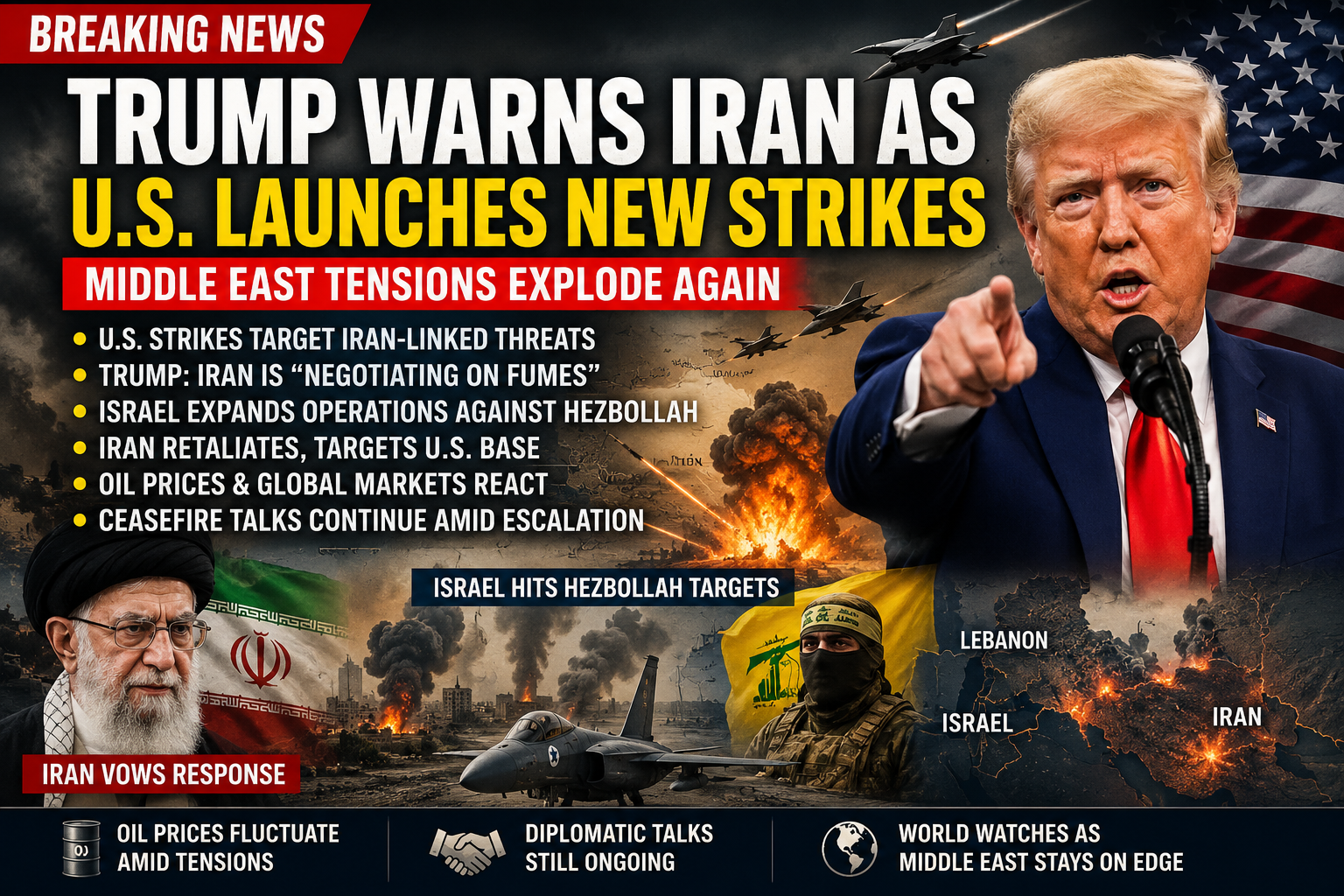
Trump Says Iran Is “Negotiating on Fumes”
The Middle East crisis intensified once again after the United States launched another round of military strikes targeting Iranian-linked threats, while President Donald Trump issued strong warnings toward Iran during ongoing negotiations. The latest developments have increased fears of a wider regional conflict involving Israel, Hezbollah, Lebanon, and Gulf nations.
According to reports, the U.S. military described the latest operations as “defensive strikes” aimed at preventing attacks on American forces and protecting commercial shipping routes near the Strait of Hormuz. Iranian officials later claimed they retaliated by targeting a U.S. base in the region, although reports suggested incoming threats were intercepted before major damage occurred.
During a White House Cabinet meeting, President Trump stated that Iran is “negotiating on fumes” and warned that the U.S. could “finish the job” if negotiations fail.
Trump also pushed for stronger Middle East alliances, encouraging Gulf countries including Saudi Arabia and Qatar to support expanded normalization agreements with Israel under the Abraham Accords framework. The comments came as diplomatic discussions continue over extending the ceasefire and reopening vital shipping lanes in the Strait of Hormuz.
Israel Expands Operations Against Hezbollah
At the same time, Israel has reportedly intensified military operations in southern Lebanon against Hezbollah positions. Israeli officials stated their forces are attempting to secure strategic areas near the border after continued rocket and drone threats.
Thousands of civilians in southern Lebanon have reportedly been displaced as tensions continue to rise. International observers fear that the situation could evolve into a larger regional war if diplomatic negotiations collapse.
Oil Prices and Global Markets React
Global markets are closely monitoring the situation. Oil prices briefly dropped after reports suggested possible progress in U.S.-Iran negotiations, with investors hoping for reduced military escalation and reopening of the Strait of Hormuz.
Energy experts warn that any prolonged disruption in the region could heavily impact global oil supply chains and international trade routes.
Iran Accuses U.S. of Ceasefire Violations
Iranian officials accused the United States of violating ceasefire understandings through continued military actions. Meanwhile, Washington maintains that the operations were defensive and necessary to protect regional security and maritime traffic.
Diplomatic channels remain active, but uncertainty continues to dominate the region as both military activity and political pressure increase.
Growing Concerns Across the Middle East
The ongoing conflict involving Iran, Israel, Hezbollah, and the United States has created widespread concerns across the Middle East. Governments and international organizations continue urging restraint to prevent a larger humanitarian and economic crisis.
Security analysts believe the coming days could determine whether negotiations move toward peace or whether military escalation continues further across the region.
Reference Source: This news article was researched and inspired by reporting from CBS News regarding the ongoing Middle East conflict involving Iran, Israel, Hezbollah, and the United States.
