
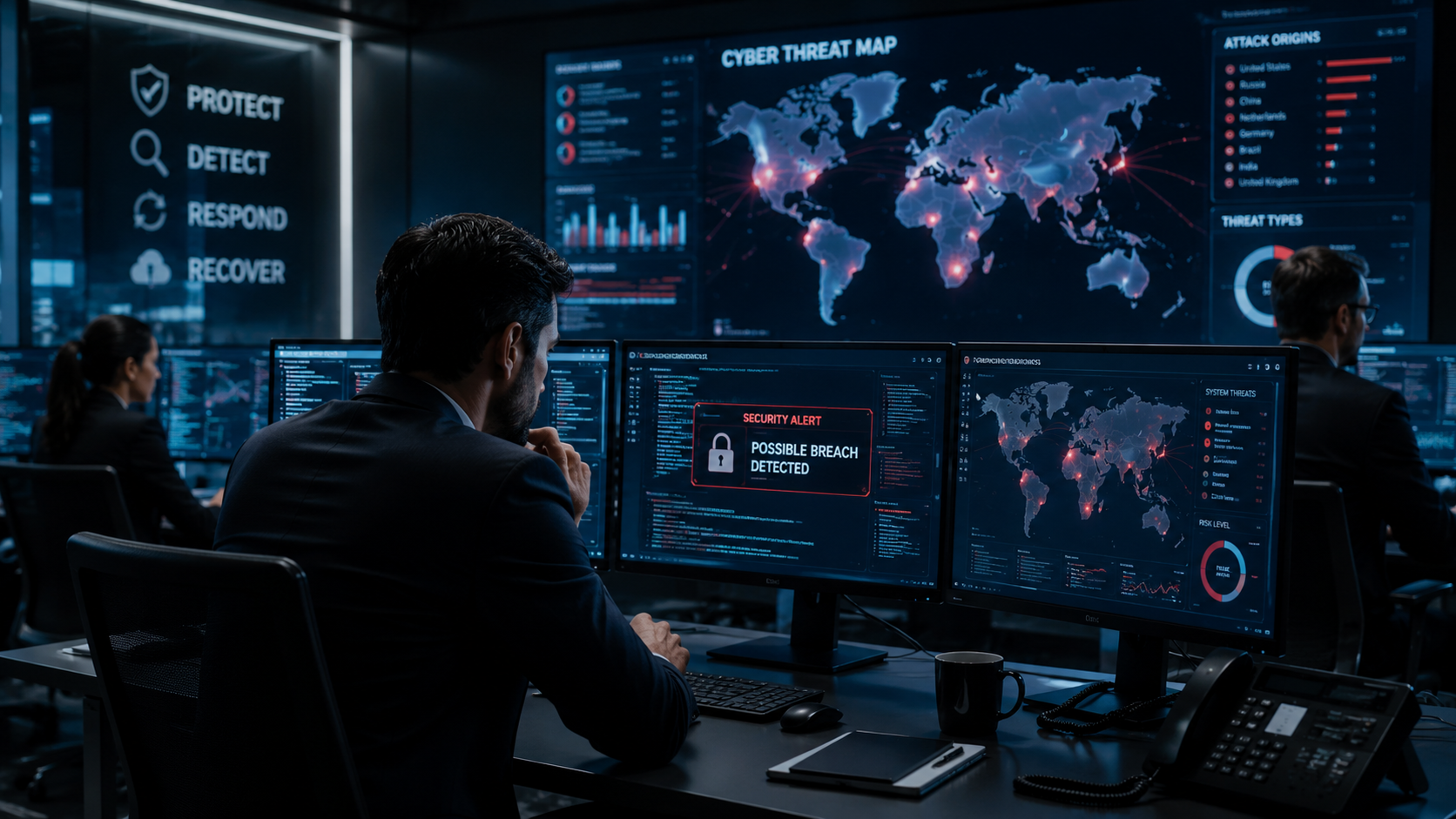
Learn about the biggest Business Cybersecurity challenges and how organizations can protect data, systems, and customer trust from cyber threats.
Cybersecurity Challenges Facing Modern Businesses
As businesses become increasingly dependent on digital technology, cybersecurity has become one of the most important priorities for organizations of every size. From financial transactions and customer records to cloud-based applications and remote work environments, valuable business data is constantly at risk. Strong Business Cybersecurity practices are essential for protecting sensitive information, maintaining customer trust, and ensuring business continuity.
Understanding today’s cybersecurity challenges helps businesses prepare for an increasingly complex digital landscape.
Growing Cyber Threats
Cybercriminals continuously develop new methods to attack businesses. Malware, ransomware, phishing, identity theft, and data breaches remain among the most common threats facing organizations.
Businesses that invest in proactive Business Cybersecurity strategies are better equipped to identify and respond to these evolving risks before significant damage occurs.
Phishing Attacks
Phishing attacks use fraudulent emails, messages, or websites to trick employees into revealing sensitive information such as passwords or financial details.
Employee awareness training is one of the most effective ways to reduce the risk of successful phishing attacks.
Ransomware Risks
Ransomware encrypts business data and demands payment before files can be restored. These attacks can disrupt operations, damage customer relationships, and result in significant financial losses.
Regular data backups, updated security software, and incident response plans help reduce the impact of ransomware attacks.
Remote Work Security
The growth of remote and hybrid work has expanded the number of devices and networks connected to business systems. Employees working from home may use unsecured internet connections or personal devices that increase cybersecurity risks.
Businesses should implement secure virtual private networks (VPNs), multi-factor authentication, and endpoint protection to strengthen remote work security.
Cloud Security Challenges
Cloud computing provides flexibility and efficiency, but organizations must also protect cloud-based applications and stored data. Poor access controls, weak passwords, and misconfigured cloud services can expose sensitive information.
Businesses should use strong authentication methods, encrypt sensitive data, and regularly review cloud security settings.
Insider Threats
Not all cybersecurity risks originate outside the organization. Employees, contractors, or business partners may accidentally or intentionally expose confidential information.
Access permissions should be limited based on job responsibilities, and organizations should monitor sensitive systems for unusual activity.
Weak Password Practices
Simple or reused passwords remain one of the most common security weaknesses. Cybercriminals often exploit weak credentials to gain unauthorized access to business systems.
Strong password policies, password managers, and multi-factor authentication significantly improve Business Cybersecurity.
Protecting Customer Data
Customers expect businesses to safeguard their personal and financial information. Data breaches can damage a company’s reputation, reduce customer confidence, and result in legal or regulatory consequences.
Businesses should encrypt sensitive information, follow data protection regulations, and maintain secure data storage practices.
Cybersecurity Awareness Training
Technology alone cannot eliminate cyber risks. Employees should receive regular training on recognizing phishing attempts, handling sensitive information, reporting suspicious activity, and following company security policies.
An informed workforce serves as one of the strongest defenses against cyberattacks.
Developing an Incident Response Plan
Even with strong security measures, cyber incidents can still occur. Businesses should establish a detailed incident response plan outlining how to detect threats, contain attacks, recover data, and communicate with customers and stakeholders.
Prepared organizations recover more quickly while minimizing operational disruption.
Investing in Continuous Security Improvements
Cyber threats evolve constantly, making ongoing security improvements essential. Businesses should regularly update software, conduct security assessments, monitor systems, and review cybersecurity policies to address emerging risks.
Continuous improvement helps organizations maintain strong protection in a changing digital environment.
Conclusion
Business Cybersecurity is no longer optional—it is a fundamental requirement for modern organizations. Growing cyber threats, ransomware, phishing, cloud security risks, insider threats, and remote work challenges require businesses to adopt comprehensive security strategies. By investing in employee training, advanced security technologies, strong authentication, and continuous monitoring, organizations can protect valuable data, strengthen customer trust, and ensure long-term business resilience.
FAQ
1. What is Business Cybersecurity?
Business Cybersecurity refers to the strategies, technologies, and practices used to protect business systems, networks, and data from cyber threats.
2. Why is Business Cybersecurity important?
It protects sensitive information, prevents financial losses, ensures business continuity, and helps maintain customer trust.
3. What are the biggest cybersecurity threats facing businesses?
Phishing, ransomware, malware, insider threats, weak passwords, cloud security vulnerabilities, and data breaches are among the most common risks.
4. How can businesses improve Business Cybersecurity?
Businesses should implement multi-factor authentication, train employees, update software regularly, encrypt sensitive data, perform regular backups, and monitor systems continuously.
5. Is Business Cybersecurity important for small businesses?
Yes. Small businesses are frequent targets of cybercriminals and should implement strong security practices to protect their operations and customer information.
