
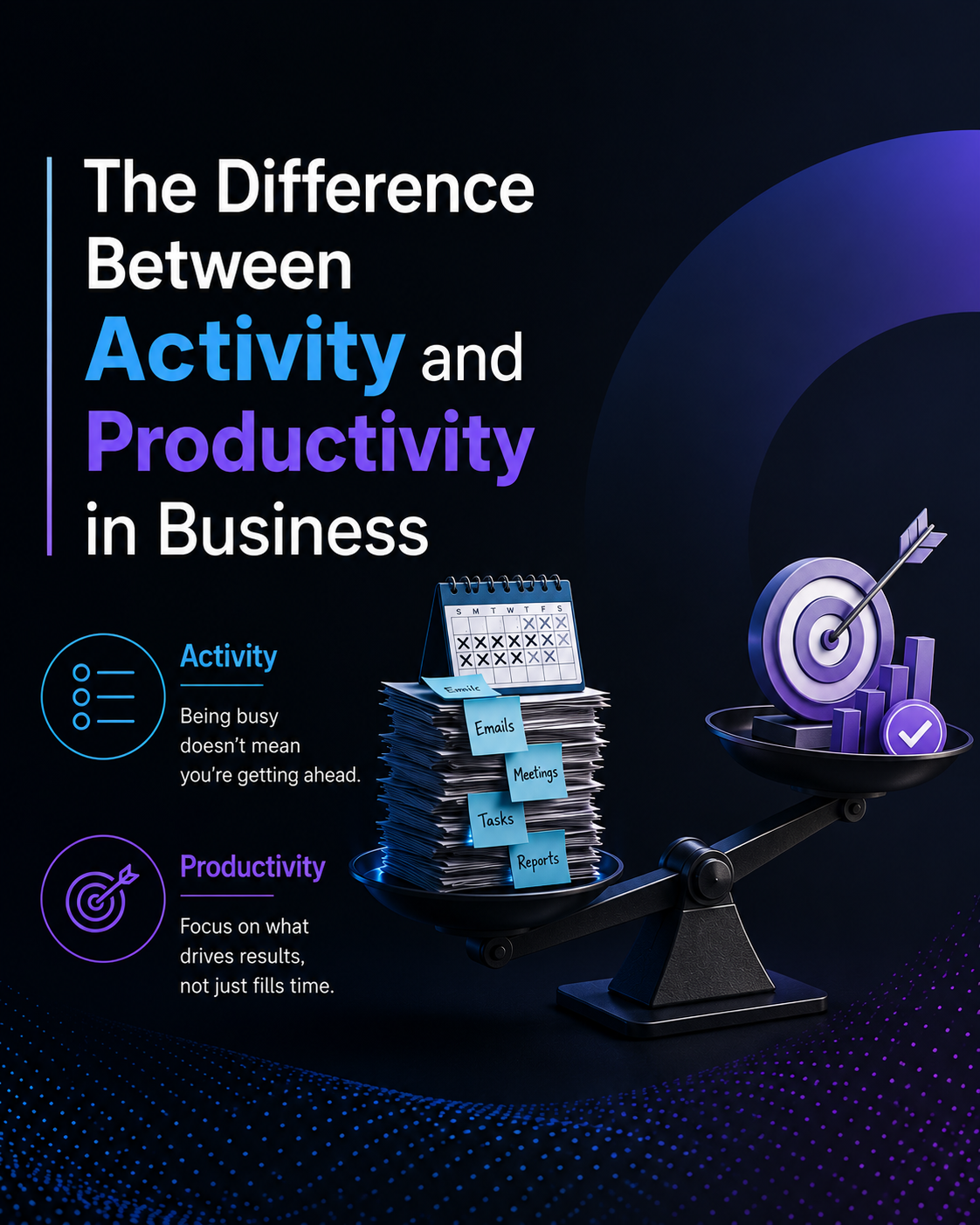
Learn the difference between Business Productivity and busy work. Discover how focusing on meaningful results improves efficiency and business growth.
The Difference Between Activity and Productivity in Business
Many business owners and professionals confuse being busy with being productive. A full calendar, endless meetings, and long work hours may create the appearance of progress, but they do not always lead to meaningful results. Understanding Business Productivity is essential for companies that want sustainable growth, better decision-making, and improved performance.
Businesses that focus on outcomes instead of constant activity are better positioned to achieve their goals while making the best use of their time, resources, and talent.
What Is Activity?
Activity refers to the tasks people perform throughout the day. These can include:
- Attending meetings
- Responding to emails
- Completing paperwork
- Making phone calls
- Organizing files
- Updating reports
These activities may be necessary, but simply staying busy does not guarantee progress. Without a clear purpose, activity can consume valuable time while producing little value for the organization.
What Is Business Productivity?
Business Productivity measures how effectively a business converts its resources into valuable results. It focuses on completing the right tasks that directly contribute to company objectives.
Examples of productive work include:
- Closing new business opportunities
- Improving customer satisfaction
- Streamlining business processes
- Increasing revenue
- Reducing operational costs
- Launching successful products or services
Productivity is measured by outcomes rather than the amount of work performed.
Why Businesses Often Mistake Activity for Productivity
Several factors contribute to this misunderstanding.
Constant Communication
Employees may spend much of their day replying to messages, attending meetings, or participating in discussions. While communication is important, excessive meetings often reduce the time available for meaningful work.
Multitasking
Many people believe multitasking increases efficiency. In reality, constantly switching between tasks often reduces focus and increases mistakes.
Measuring Effort Instead of Results
Some organizations reward employees based on hours worked instead of the value they create. This encourages busyness rather than effectiveness.
Lack of Clear Priorities
Without defined objectives, teams may complete numerous tasks that have little impact on business performance.
Characteristics of Highly Productive Businesses
Organizations with strong Business Productivity share several common qualities.
Clear Objectives
Every employee understands the company’s goals and how their work contributes to achieving them.
Efficient Processes
Successful businesses continuously improve workflows to eliminate unnecessary steps and reduce wasted time.
Smart Technology
Automation, collaboration tools, and data analytics reduce repetitive work and allow employees to focus on higher-value activities.
Performance Measurement
Rather than tracking only completed tasks, productive companies evaluate meaningful business outcomes such as customer satisfaction, profitability, and operational efficiency.
Practical Ways to Improve Business Productivity
Improving productivity requires intentional planning rather than simply working harder.
Prioritize High-Impact Tasks
Focus first on activities that generate measurable business value.
Reduce Unnecessary Meetings
Schedule meetings only when collaboration is essential, and keep them focused with clear agendas.
Set Measurable Goals
Define specific objectives with deadlines and performance indicators so progress can be monitored effectively.
Delegate Effectively
Assign routine tasks to the appropriate team members, allowing leaders to focus on strategic priorities.
Invest in Employee Development
Training helps employees improve skills, work more efficiently, and adapt to changing business needs.
Review Processes Regularly
Identify bottlenecks and eliminate repetitive or outdated procedures that slow operations.
Measuring Business Productivity
Businesses can monitor productivity using key performance indicators such as:
- Revenue per employee
- Customer retention rates
- Project completion times
- Profit margins
- Sales growth
- Operational costs
- Employee output
- Customer satisfaction scores
Regular analysis helps organizations identify areas for improvement and make informed business decisions.
Common Productivity Mistakes
Many businesses unintentionally reduce productivity by:
- Overloading employees with unnecessary tasks
- Holding excessive meetings
- Avoiding delegation
- Failing to automate repetitive work
- Measuring attendance instead of performance
- Ignoring employee feedback
- Constantly changing priorities
Recognizing these habits allows organizations to create a more focused and efficient workplace.
The Long-Term Value of Business Productivity
Strong Business Productivity supports long-term growth by helping companies achieve more with existing resources. Productive businesses adapt more quickly to market changes, improve customer experiences, increase profitability, and create healthier work environments.
Rather than rewarding constant activity, successful organizations encourage purposeful work that aligns with strategic objectives. This results in better decision-making, improved efficiency, and stronger competitive advantages.
Conclusion
Understanding the difference between activity and Business Productivity is one of the most valuable lessons for any organization. Being busy does not always mean making progress. Businesses that focus on meaningful outcomes, efficient processes, and measurable goals consistently outperform those that simply stay occupied.
By emphasizing results over routine activity, companies can build stronger teams, improve operational performance, and position themselves for sustainable success in an increasingly competitive business environment.
