
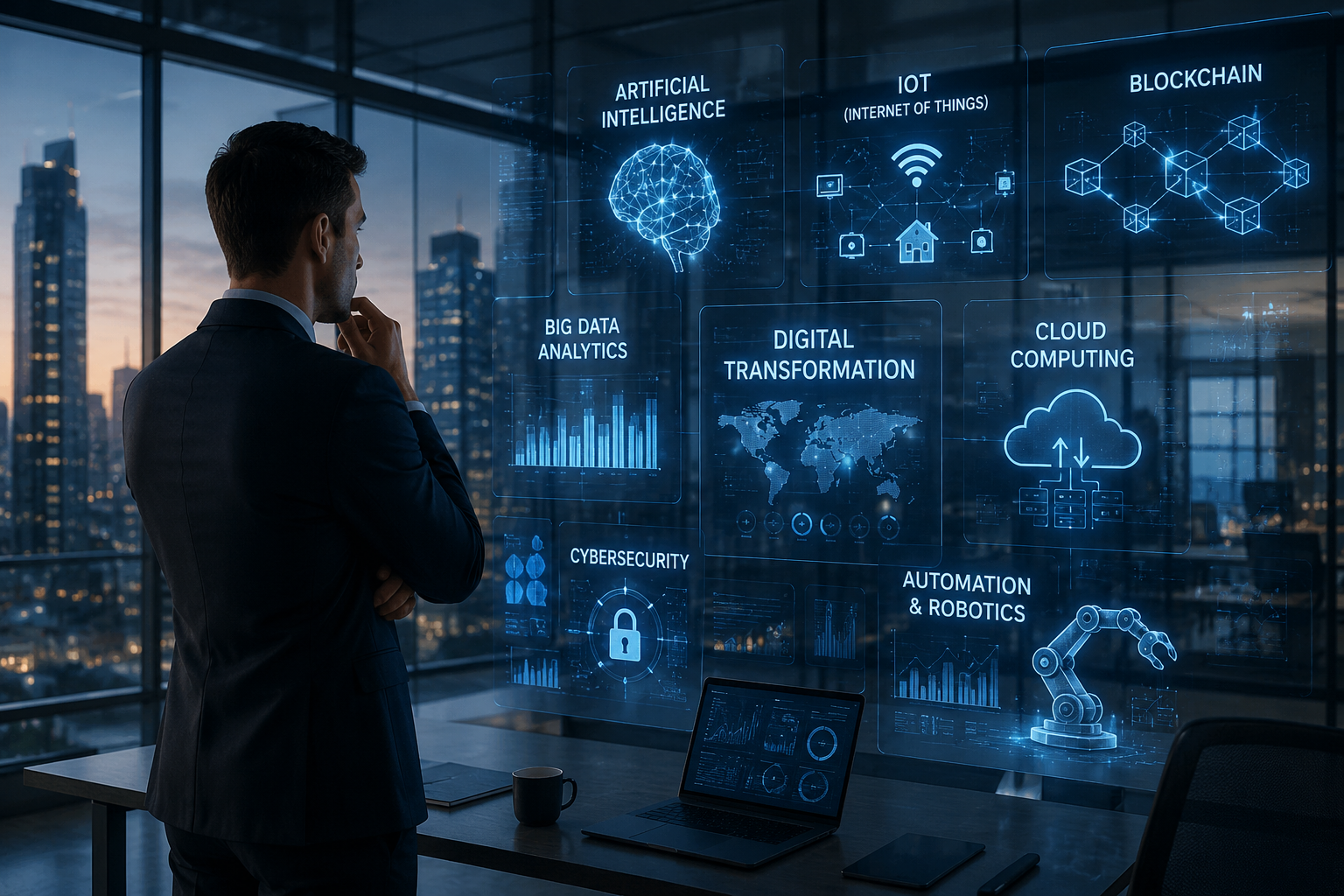
Discover how Emerging Technology is transforming businesses through AI, automation, cloud computing, cybersecurity, and digital innovation.
Emerging Technologies That Will Shape the Future of Business
The business world is evolving faster than ever, driven by Emerging Technology that is transforming industries across the globe. Companies of every size are adopting new digital solutions to improve efficiency, strengthen customer relationships, and remain competitive in rapidly changing markets.
Understanding how Emerging Technology influences business operations helps organizations prepare for future opportunities while reducing the risks associated with technological disruption.
Artificial Intelligence Is Becoming a Business Essential
Artificial intelligence (AI) has moved beyond being an experimental tool. Today, businesses use AI to automate repetitive tasks, analyze customer behavior, improve forecasting, and enhance decision-making.
From intelligent chatbots to predictive analytics, AI enables organizations to deliver better customer experiences while reducing operational costs.
Automation Improves Productivity
Automation allows businesses to streamline workflows and eliminate manual processes that consume valuable time. Modern automation platforms can manage routine administrative tasks, inventory management, invoicing, marketing campaigns, and customer support.
As Emerging Technology continues to develop, automation will become increasingly accessible to businesses of all sizes.
Cloud Computing Enables Greater Flexibility
Cloud computing has fundamentally changed how organizations store data and operate their digital infrastructure. Businesses can now access applications and information securely from virtually anywhere while reducing the need for expensive on-site hardware.
Cloud platforms also support remote work, collaboration, and scalable business growth.
Internet of Things Creates Smarter Operations
The Internet of Things (IoT) connects devices, equipment, and sensors that continuously collect valuable operational data.
Manufacturers, logistics companies, retailers, and healthcare providers use IoT solutions to monitor performance, reduce downtime, optimize inventory, and improve customer service through real-time insights.
Cybersecurity Remains a Top Priority
As businesses become more digital, cybersecurity becomes increasingly important. Protecting customer information, financial records, and intellectual property is essential for maintaining trust and ensuring business continuity.
Organizations are investing in advanced security technologies, employee awareness programs, and continuous monitoring to defend against evolving cyber threats.
Machine Learning Enhances Business Intelligence
Machine learning enables systems to recognize patterns, learn from data, and improve predictions over time. Businesses use machine learning to personalize customer experiences, detect fraud, optimize pricing strategies, and forecast market trends.
This capability helps organizations make smarter decisions with greater confidence.
Blockchain Improves Transparency
Blockchain technology offers secure and transparent record-keeping across various industries. Beyond cryptocurrency, businesses are exploring blockchain for supply chain management, digital contracts, identity verification, and secure transactions.
Its decentralized nature can improve efficiency while reducing fraud and administrative complexity.
Extended Reality Is Changing Customer Experiences
Virtual Reality (VR), Augmented Reality (AR), and Mixed Reality (MR) are creating new opportunities for businesses to engage customers.
Retailers allow customers to visualize products before purchasing, manufacturers provide immersive employee training, and real estate companies offer virtual property tours, enhancing both customer satisfaction and operational efficiency.
Data Analytics Drives Better Decisions
Modern businesses generate enormous amounts of data every day. Advanced analytics platforms transform this information into actionable insights that support marketing, finance, operations, and strategic planning.
Organizations that effectively leverage data often gain a significant competitive advantage.
Preparing for the Future
No single innovation will define tomorrow’s business environment. Instead, success will come from understanding which Emerging Technology solutions align with organizational goals and implementing them strategically.
Companies that embrace continuous learning, invest in digital transformation, and remain adaptable will be better positioned to navigate future market changes and capitalize on new opportunities.
Conclusion
Emerging Technology continues to reshape how businesses operate, compete, and grow. Artificial intelligence, automation, cloud computing, IoT, blockchain, cybersecurity, and advanced analytics are no longer concepts of the future—they are becoming integral components of successful business strategies.
Organizations that proactively adopt these technologies can improve efficiency, enhance customer experiences, reduce costs, and create sustainable long-term growth. By staying informed and embracing innovation, businesses can confidently prepare for the next generation of digital transformation.
