
Air travel is becoming more expensive, fuel costs are rising and international routes continue to face disruption. Yet one corner of aviation appears remarkably resilient: luxury travel.
Air France says demand for its premium cabins continues to grow even after significant increases in ticket prices, as wealthier passengers remain willing to spend heavily for more space, privacy, food and personalised service.
Revenue from the airline's premium cabins has risen 11%, Chief Executive Ben Smith told Reuters, highlighting a broader shift in which high-end passengers are becoming increasingly important to airline economics.
Premium Travel Is Defying the Pressure on Aviation
The aviation industry is dealing with an uncomfortable combination of pressures.
Jet fuel has become more expensive, borrowing costs have increased and geopolitical disruption has complicated international flight schedules. Industry financiers told Reuters this week that fuel and financing costs have overtaken aircraft shortages as their biggest concerns.
Ordinarily, that environment would make passengers more sensitive to higher fares.
But luxury travellers are behaving differently.
Air France says bookings remain strong across premium economy, business and first class even after substantial fare increases.
That suggests airlines may increasingly rely on travellers willing to pay considerably more than the price of a standard economy ticket.
First Class Is Becoming an Experience, Not Just a Seat
Premium aviation has moved far beyond simply providing additional legroom.
Airlines increasingly treat their most expensive cabins like airborne luxury hotels.
Private suites, high-end dining, designer amenity kits, premium bedding and airport concierge services are all being used to differentiate the experience.
Air France has leaned heavily into that strategy.
Its premium offering includes luxury-branded products and upgraded food and drink, while its most expensive cabins are designed around privacy and exclusivity.
The objective is straightforward: make flying itself part of the holiday or business experience rather than merely transportation between two places.
Paris Has Become Part of the Product
Air France has another advantage: Paris.
The French capital's global reputation for fashion, hotels, cuisine and luxury retail gives the airline a powerful lifestyle identity.
Air France is increasingly connecting its premium experience with that wider image of French luxury.
That means the product being sold is not simply a seat from one airport to another.
It is an extension of the destination itself.
Passengers encounter French food, hospitality and luxury branding before they even arrive in Paris.
Popular Culture Is Helping Too
Paris's visibility in entertainment continues to influence tourism.
Reuters noted the popularity of the television series Emily in Paris as one factor contributing to international fascination with the city.
Television and social media can significantly influence travel behaviour.
A destination repeatedly appearing in popular entertainment can become aspirational to viewers who have never visited it.
Restaurants, hotels, neighbourhoods and fashion districts can then become part of the tourism experience.
This phenomenon is sometimes described as screen tourism or film-induced tourism.
Travellers Are Paying More for Comfort
The continued strength of premium bookings also reflects changing attitudes towards long-distance travel.
For passengers spending eight, ten or twelve hours on an aircraft, comfort has significant value.
A flat bed can mean arriving rested.
Lounge access can make a long airport connection easier.
Priority services can reduce time spent waiting.
For business travellers, those conveniences may translate into productivity.
For leisure travellers, they can make the flight itself feel like part of a luxury holiday.
That distinction becomes particularly important as travellers place more emphasis on experiences.
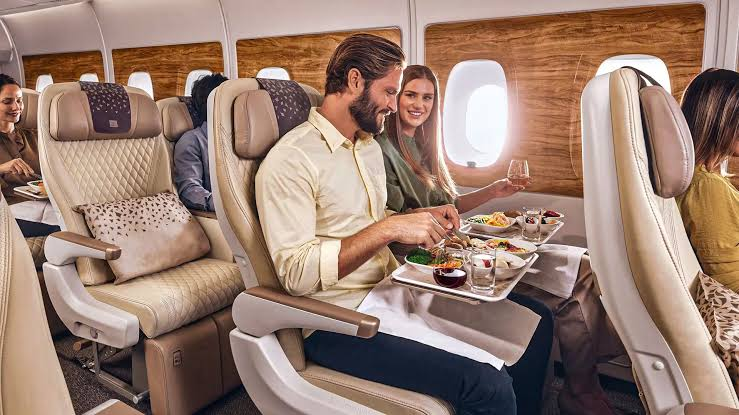
Premium Economy Has Created a Middle Ground
Not every passenger willing to pay for additional comfort can afford international business class.
That has made premium economy increasingly important.
The cabin typically provides more space and upgraded service without reaching the price of business class.
For airlines, it can be an attractive product because it allows them to segment passengers more precisely.
Economy remains available for price-sensitive travellers.
Premium economy targets passengers prepared to spend somewhat more.
Business and first class capture customers willing to pay substantially higher fares.
The aircraft effectively becomes several different travel products operating simultaneously.
Some Private-Jet Travellers Are Moving Back to Airlines
One particularly interesting trend involves private aviation.
Smith told Reuters that Air France has attracted some passengers who previously travelled by private jet.
Environmental scrutiny is one factor.
Private aviation can produce extremely high emissions per passenger compared with commercial travel, particularly when aircraft carry only a handful of people.
A separate report published Friday highlighted growing concern about the climate impact of private jets and the rapid expansion of their use.
For wealthy travellers who still want privacy and premium service, international first class can offer an alternative without the visibility associated with private-jet travel.
Private Aviation Is Facing Greater Climate Scrutiny
The debate around luxury travel is increasingly tied to climate policy.
The United States accounts for roughly 69% of the world's registered private jets, according to a report covered by Reuters.
Critics argue that private aviation creates disproportionate emissions while often receiving favourable tax treatment.
Supporters of business aviation point to its economic role, flexibility and ability to connect destinations poorly served by commercial airlines.
The debate is unlikely to disappear.
But increasing scrutiny may make premium commercial aviation more attractive to some travellers who previously relied heavily on private aircraft.
Airlines Make Disproportionate Revenue From Premium Seats
A business-class seat occupies considerably more space than an economy seat.
So why dedicate so much aircraft floor area to a relatively small number of passengers?
Because the fares can be dramatically higher.
Premium passengers can generate a disproportionate share of revenue on long-haul routes.
That makes them especially valuable when operating costs rise.
If fuel becomes more expensive, an airline with strong premium demand may be better positioned to absorb those costs than one competing primarily for the cheapest fares.
This helps explain why airlines continue investing heavily in high-end cabins.
Luxury Travel Can Be More Resistant to Inflation
Higher prices affect travellers differently.
A family carefully budgeting for an annual holiday may respond to inflation by travelling less, choosing a cheaper destination or flying at a less expensive time.
Very wealthy travellers have more flexibility.
A higher airfare may represent a relatively small change in their overall travel budget.
That makes premium demand potentially more resilient during inflationary periods.
It does not make luxury aviation immune to recessions or economic shocks.
But it can provide airlines with a valuable cushion when mass-market consumers become more cautious.
Airlines Are Competing Like Luxury Brands
This competition is increasingly visible in cabin design.
International airlines are investing in sliding doors, private suites, improved lighting, larger entertainment screens and increasingly elaborate dining.
Some first-class products include enclosed spaces that resemble small hotel rooms more than conventional airline seats.
The competition is no longer simply about which carrier has the newest aircraft.
It is about which carrier can create the most desirable experience inside it.
That brings airlines into competition not only with each other but also with luxury hotels and hospitality brands.
Social Media Has Changed the Value of Premium Travel
Luxury travel has also become highly visible online.
Cabin tours, lounge reviews and first-class meal videos attract large audiences across social platforms.
A product once experienced only by a tiny number of passengers can now be viewed by millions.
That visibility has marketing value.
A traveller posting a premium suite effectively advertises the airline's most expensive product.
It can also create aspiration among passengers who may save points, upgrade with miles or pay extra for a special trip.
But Luxury Cannot Solve Every Airline Problem
Strong premium demand does not remove the wider challenges facing aviation.
Fuel prices remain a major cost.
Aircraft financing has become more expensive.
Route disruption can force airlines to fly longer paths or cancel services.
Airlines also face pressure to reduce emissions while passenger numbers continue growing.
Premium cabins therefore represent one strategy for protecting profitability, not a solution to every problem confronting the industry.
The Travel Market Is Becoming More Divided
The resilience of luxury aviation also points towards a broader change in consumer behaviour.
Travel is becoming increasingly segmented.
At one end are passengers aggressively comparing fares and searching for the cheapest possible journey.
At the other are travellers willing to spend heavily for convenience, exclusivity and comfort.
Airlines are designing products for both.
That means the future of aviation may not revolve around one standard passenger experience.
Instead, carriers may continue dividing aircraft into increasingly specialised products at very different price points.
What Happens Next?
The key question is whether premium demand remains strong if economic conditions weaken further.
For now, Air France's numbers suggest affluent travellers are still willing to spend.
An 11% increase in premium-cabin revenue during a difficult period for global aviation is significant.
It also reveals something larger about modern travel.
For some passengers, the destination is no longer the only luxury.
The journey itself has become part of what they are paying for.