
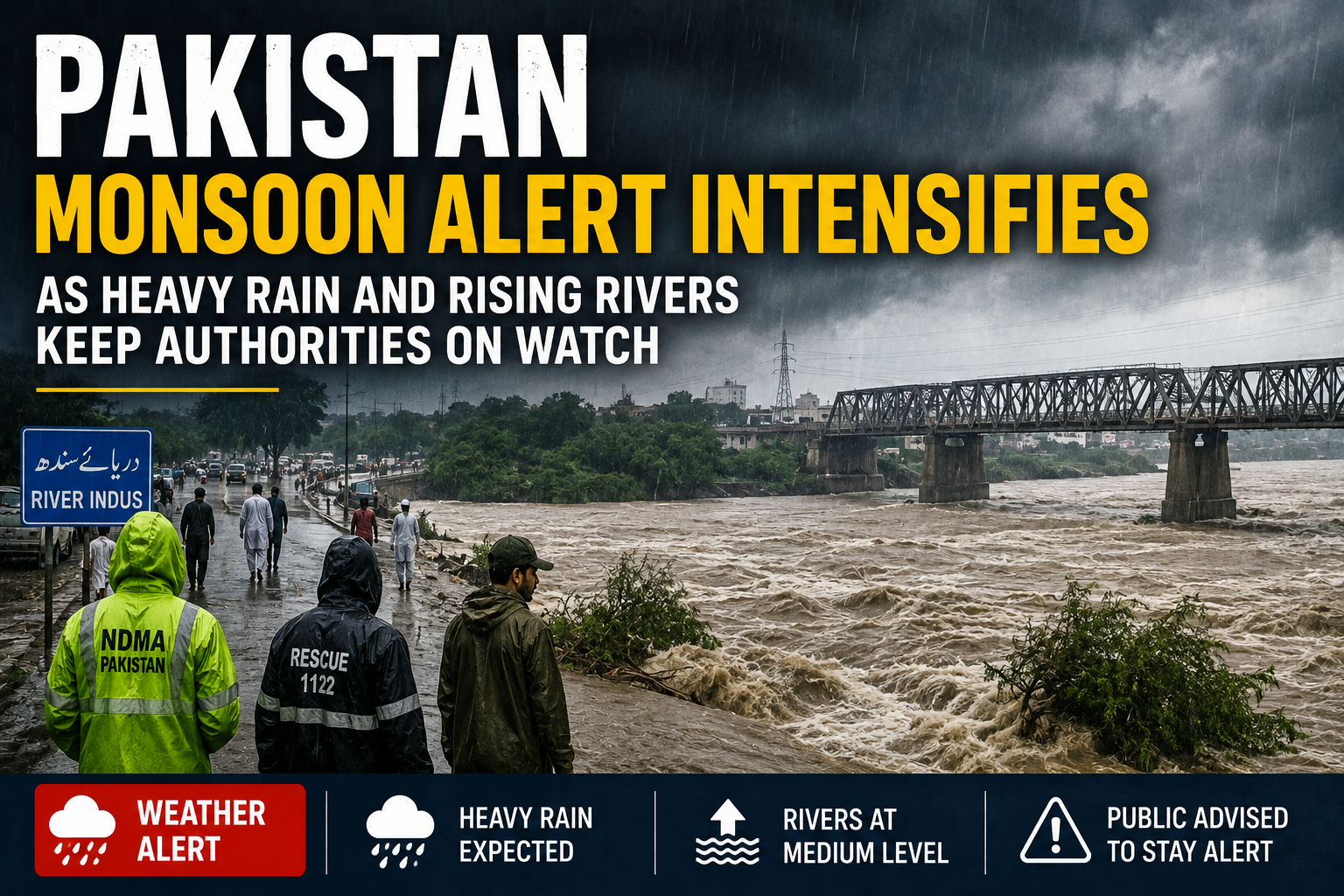
Pakistan’s monsoon season remains firmly in focus as authorities monitor rising river levels, continuing rainfall and the possibility of further flooding across vulnerable parts of the country.
The latest official flood information shows that the Indus River at Kalabagh has been running at medium flood level, while several other locations along the Indus remain at lower flood levels.
At the same time, widespread rain, thunderstorms and isolated heavy falls have been forecast across parts of Khyber Pakhtunkhwa, Punjab, Islamabad and Kashmir.
The situation has placed disaster-management agencies, local administrations and communities on continued alert after weeks of disruptive monsoon weather.
Indus River Closely Monitored
Pakistan’s Flood Forecasting Division continues to monitor the country’s major rivers as monsoon rainfall feeds waterways and tributaries.
The Indus River is particularly important because it passes through large areas of the country and supports millions of people, agricultural communities and irrigation systems.
Recent official data placed the Indus at Kalabagh at medium flood level, while other monitoring points were recording lower levels.
Authorities have also indicated that Guddu could reach medium flood level as water moves downstream.
Such forecasts do not necessarily mean severe flooding will occur everywhere along the river.
However, they provide authorities with valuable time to monitor vulnerable communities and prepare for possible changes.
More Rain Expected Across Several Regions
The weather remains another major concern.
Rain-wind thunderstorms accompanied by isolated heavy rainfall have been forecast across numerous districts.
Parts of Khyber Pakhtunkhwa, including areas around Peshawar and several northern and western districts, are among locations where additional rainfall has been expected.
Punjab has also remained under the influence of active monsoon weather, with rain expected in areas including Rawalpindi, Gujranwala, Gujrat, Sialkot and surrounding districts.
Rainfall has also been forecast around Islamabad and Kashmir.
The amount of rainfall can vary considerably even within the same province.
A relatively short but intense downpour can sometimes create serious local flooding even when neighbouring areas receive much less rain.
Flash Flooding Remains a Serious Risk
Pakistan’s geography makes some communities particularly vulnerable to sudden flooding.
Mountainous and hilly regions can experience rapidly moving water following intense rainfall.
Unlike slower river flooding, flash floods can develop with little warning.
Water rushing through valleys, streams and seasonal channels can damage roads, bridges, homes and agricultural land.
Urban areas face a different problem.
When rainfall falls faster than drainage systems can remove it, roads and neighbourhoods can become waterlogged.
The danger can be particularly serious in densely populated cities where blocked drains, construction and limited water channels can worsen flooding.
Infrastructure Comes Under Pressure
The 2026 monsoon has already demonstrated how heavy rainfall can affect infrastructure.
Roads, bridges and local transport networks are especially vulnerable when water levels rise rapidly.
Damage to even one important bridge can isolate communities or force commuters to travel significantly longer distances.
Infrastructure problems can also complicate emergency response.
Rescue teams depend on functioning roads to reach communities affected by floods or landslides.
When roads themselves become damaged, delivering food, medicine and other essential supplies becomes more difficult.
This makes infrastructure protection an important part of disaster preparedness.
Farmers Watch the Weather Closely
The agricultural sector is also paying close attention to changing weather conditions.
Pakistan depends heavily on agriculture, and the monsoon plays an important role in supplying water for crops.
Rainfall can therefore be beneficial.
The problem occurs when rain becomes excessive.
Floodwater can damage standing crops, wash away fertile soil and affect livestock.
Farmers living close to rivers and seasonal waterways can face particularly high risks when water levels rise unexpectedly.
Agricultural damage can have consequences beyond individual farms.
Reduced production can influence food supplies, commodity prices and household incomes.
This is why assessments of monsoon damage often continue long after floodwaters disappear.
Climate Vulnerability Remains a National Challenge
Pakistan has repeatedly faced severe climate-related disasters.
Its exposure to monsoon rainfall, mountainous terrain, major river systems and densely populated communities creates significant challenges for disaster management.
Extreme rainfall can produce multiple hazards simultaneously.
One region may face river flooding while another experiences a landslide.
A major city can suffer urban waterlogging while mountainous districts struggle with damaged roads and flash floods.
This makes nationwide disaster planning particularly complex.
Authorities need to respond to different types of emergencies across large geographic areas, sometimes at the same time.
Early Warnings Can Save Lives
Modern weather forecasting gives governments an important advantage that previous generations did not have.
Meteorologists can track monsoon systems and estimate where heavy rainfall is likely before it arrives.
River monitoring stations can also identify increasing water flows before downstream communities experience the highest levels.
However, forecasts are useful only when warnings reach people quickly.
Communities need to understand what an alert means and what actions they should take.
Residents living close to rivers, streams and unstable slopes should pay particular attention to instructions issued by local authorities.
People should also avoid attempting to cross flooded roads or waterways.
Water depth and current speed can be extremely difficult to judge from the surface.
Disaster Agencies Continue Monitoring Conditions
Pakistan’s National Disaster Management Authority has continued issuing situation reports throughout the 2026 monsoon season.
These reports allow federal and provincial authorities to monitor casualties, infrastructure damage and weather-related incidents across the country.
The Flood Forecasting Division also continues to publish information on river conditions and rainfall forecasts.
Together, these systems provide officials with a broader picture of how the monsoon is developing.
Local administrations remain critical because the impact of rainfall can differ dramatically between districts.
A national forecast may indicate heavy rainfall across a large area, but emergency decisions—including evacuations and road closures—often need to be made locally.
Communities Remain at the Centre of Preparedness
Government agencies play an important role in disaster response, but community preparedness can also reduce risks.
Families living in flood-prone areas can prepare emergency documents, medicines, drinking water and essential supplies in advance.
People should know the safest route to higher ground if evacuation becomes necessary.
Mobile phones should remain charged when severe weather is forecast, and residents should follow verified government alerts rather than relying on unconfirmed information circulating on social media.
Small preparations made before a flood can become extremely important during an emergency.
The Coming Days Will Be Important
Authorities will continue watching rainfall and river flows as Pakistan moves through the remaining weeks of its monsoon season.
The latest forecasts suggest that the current wet spell may decrease, although isolated rainfall is expected to continue in the upper catchments of major rivers.
Water already accumulated upstream can also continue moving through river systems after rainfall decreases.
That means monitoring cannot stop simply because the skies become clearer.
For communities living near vulnerable waterways, the message remains one of preparedness rather than panic.
Pakistan has faced difficult monsoon conditions before, and improved forecasting and early-warning systems provide authorities with opportunities to respond more quickly.
The challenge is ensuring that those warnings translate into timely action.
As August continues, Pakistan’s rivers, rainfall patterns and vulnerable districts will remain under close observation, with authorities hoping that preparedness can limit the human and economic impact of any further flooding.
