
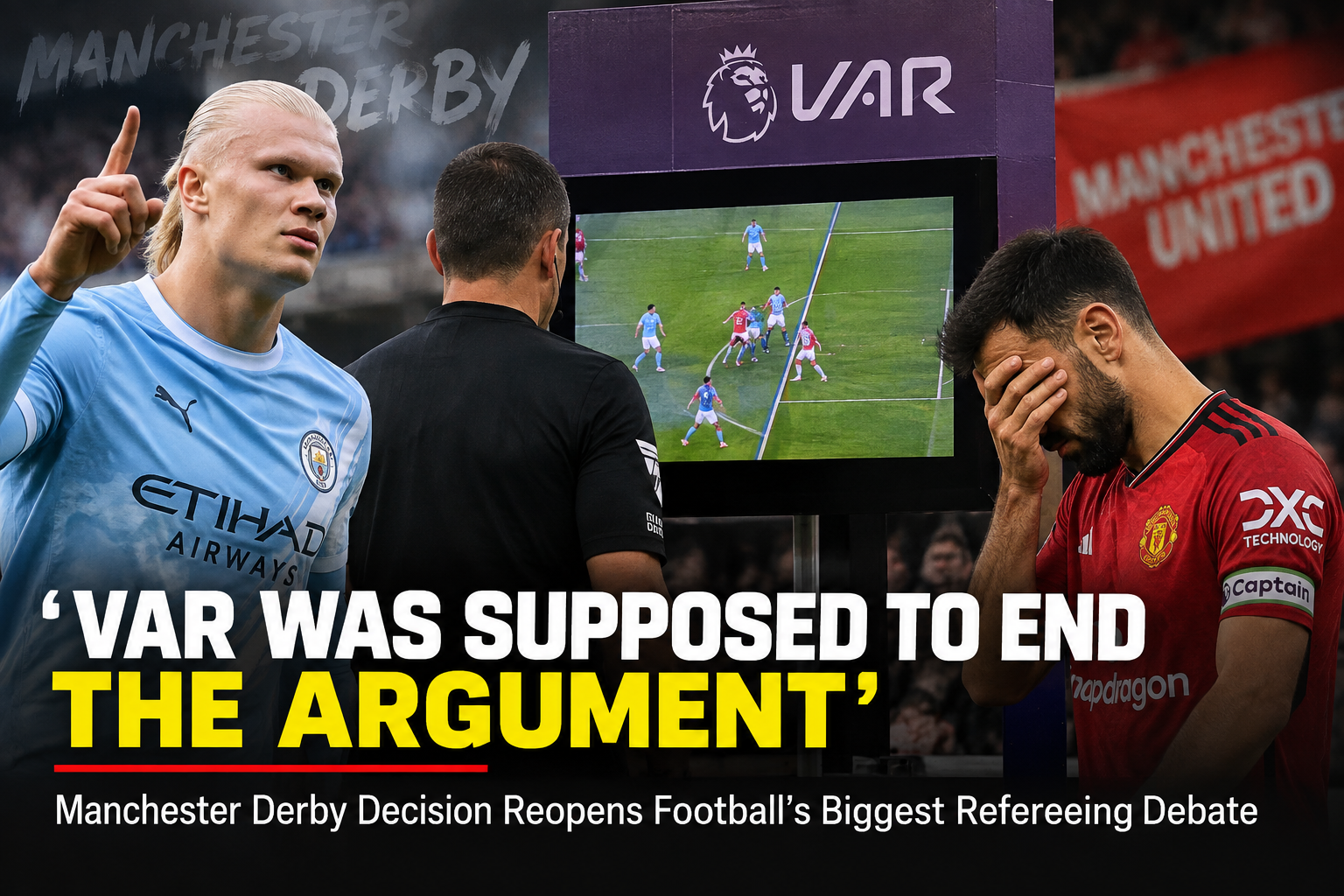
Manchester derbies rarely end when the final whistle blows.
This time, Manchester City's 1–0 victory over Manchester United has continued to generate conversation days later — and once again, VAR is at the centre of it.
Erling Haaland scored the decisive goal in a match already packed with tension. City had been reduced to 10 men following Phil Foden's first-half dismissal, yet they managed to find a way through after the break.
Haaland's goal was initially flagged for offside before a lengthy VAR review allowed it to stand. The controversy centred not only on Haaland's position, but also on whether another City player in an offside position had interfered with United's attempt to defend the cross.
Now the debate has become even bigger.
Refereeing officials have acknowledged that an error was made in the VAR process, while the officials involved were subsequently removed from Premier League assignments for the following weekend.
For supporters, it raises an uncomfortable question:
“If several officials can watch the same incident from multiple angles and still reach the wrong conclusion, what exactly should fans expect from VAR?”
That question goes beyond Manchester United and Manchester City.
Technology was introduced to help officials deal with clear mistakes and difficult moments that happen too quickly for the human eye. Instead, some of football's most controversial decisions now involve several minutes of replays, lines, different camera angles and competing interpretations of the rules.
The technology itself can provide information.
The harder problem is deciding what that information actually means.
Was a player interfering with an opponent? Did his movement affect a defender? Was an action deliberate? At what point does being in an offside position become involvement in active play?
Those are still human judgments.
That is why this Manchester derby could become another important chapter in football's continuing VAR discussion.
City have the three points. United cannot replay the moment.
But the argument surrounding the decision is unlikely to disappear as quickly as the final score.
And perhaps that is VAR's biggest problem: the screen can show us what happened — but it cannot always make everyone agree on what they saw.